© Photothek/Thomas Köhler
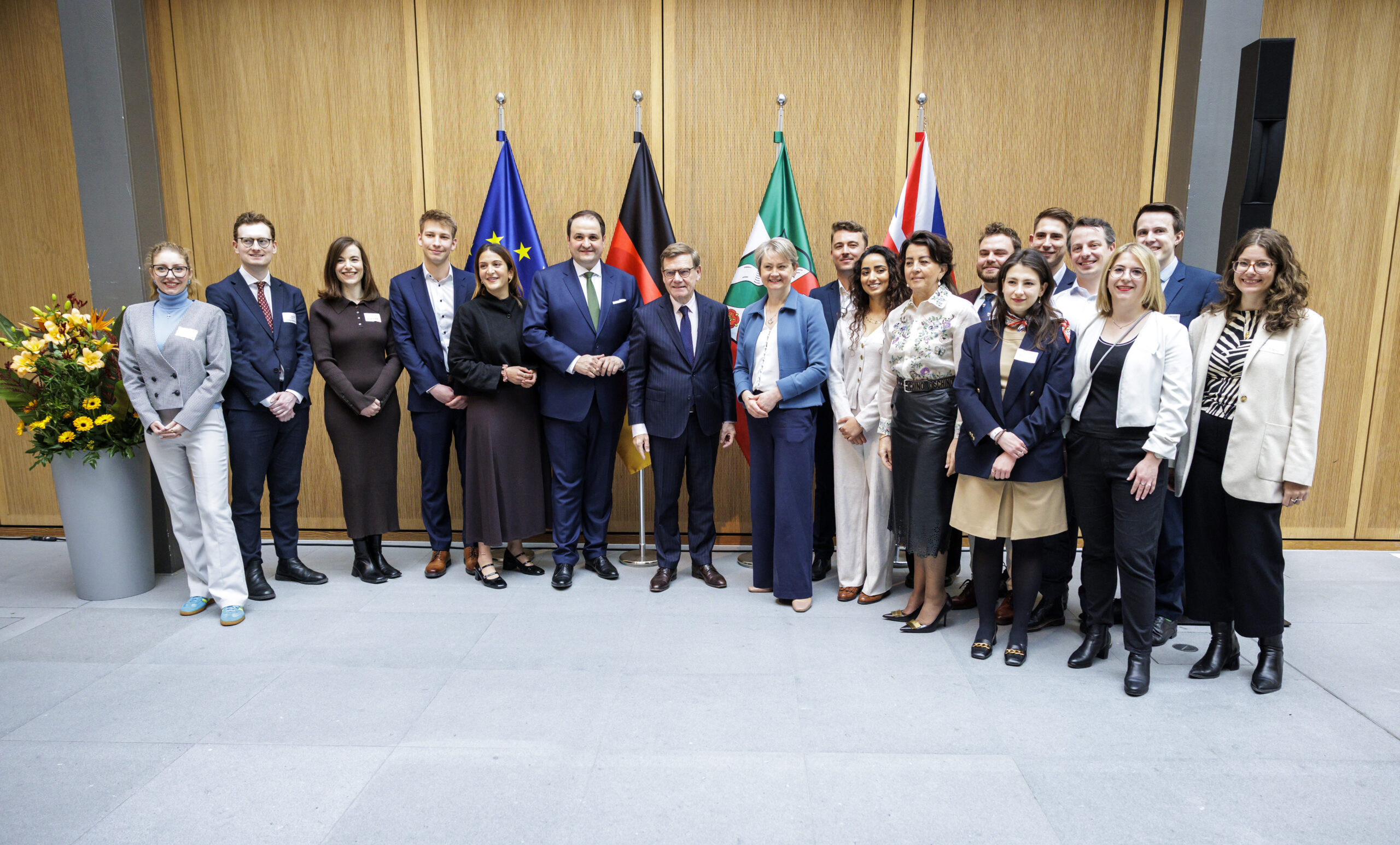
On 16 April 2026, the Deutsch-Britische Gesellschaft convened the New Königswinter Future Lab in Berlin, an event designed specifically for the next generation of UK-German bridge-builders. Bringing together young professionals and emerging voices from politics, business, civil society and academia on both sides of the Channel, the Future Lab offered a dedicated space for the generation that will shape the bilateral relationship in the decades to come. Held at the NRW State Representation in Berlin and supported by the Federal Foreign Office and bp, the day was structured around three core working groups: people-to-people exchange, digital transformation and security, and wider economic modernisation.
What made the event particularly remarkable was the signal sent by both governments from the very outset. The formal opening was delivered jointly by Federal Foreign Minister Johann Wadephul and Foreign Secretary Yvette Cooper MP — a clear statement that the views and ideas of this younger generation matter at the highest political level, and that the Königswinter Conferences are recognised as the forum for the bilateral relationship. Minister Wadephul spoke directly to the young participants, making no secret of why their presence was meaningful: they are the ones who will give life to the partnership in the years to come, shaping how both countries work together through their ideas, their networks and their engagement — whether in finance, diplomacy, tech or civil society.
His remarks set out the broader context into which this generation is stepping. Germany and the United Kingdom are facing the same monumental challenges: an eroding international order, Russia’s ongoing war of aggression against Ukraine, instability in the Middle East, a transforming transatlantic relationship, and an accelerating technological revolution driven by AI. Against this backdrop, the Kensington Treaty provides the bilateral partnership with a new structured framework, outlining 17 priority projects — spanning the economic and political levels as well as civil society — aimed at delivering tangible benefits for citizens of both countries. But Wadephul was equally clear about the limits of formal agreements: treaties do not create partnerships — people do.
The sentiment was echoed by Yvette Cooper’s speech. The Foreign Secretary spoke warmly about her personal experiences on a school exchange in Germany and stressed the importance of the bilateral relationship vis à vis the current geopolitical and technological challenged, saying how turbulence had become the new normal and both of our countries will be stronger if we stand together rather than alone. Both the Trinty House Agreements and the Kensington Treaty are important steps to drive forward bilateral cooperation, as well as the reset in the EU-UK relationship. They set out an ambitious roadmap for the future, and she welcomed the opportunity to discuss this with young people, who form both the future of Königswinter and the future of the German-British relationship.
It was the conviction that the relationship is shaped by people rather than treaties that gave the Future Lab its particular energy. Following the Q&A, moderated by John Kampfner, Vice Chair of the Deutsch-Britische Gesellschaft, participants split into three working groups and spent the morning developing concrete ideas and recommendations. The results of those discussions are set out in the report.
Download the full report from the New Königswinter Future Lab here.
Photo credit all other photos: Lukas Schramm

© Photothek/Thomas Köhler
On 16 April 2026, the Deutsch-Britische Gesellschaft convened the New Königswinter Future Lab in Berlin, an event designed specifically for the next generation of UK-German bridge-builders. Bringing together young professionals and emerging voices from politics, business, civil society and academia on both sides of the Channel, the Future Lab offered a dedicated space for the generation that will shape the bilateral relationship in the decades to come. Held at the NRW State Representation in Berlin and supported by the Federal Foreign Office and bp, the day was structured around three core working groups: people-to-people exchange, digital transformation and security, and wider economic modernisation.
What made the event particularly remarkable was the signal sent by both governments from the very outset. The formal opening was delivered jointly by Federal Foreign Minister Johann Wadephul and Foreign Secretary Yvette Cooper MP — a clear statement that the views and ideas of this younger generation matter at the highest political level, and that the Königswinter Conferences are recognised as the forum for the bilateral relationship. Minister Wadephul spoke directly to the young participants, making no secret of why their presence was meaningful: they are the ones who will give life to the partnership in the years to come, shaping how both countries work together through their ideas, their networks and their engagement — whether in finance, diplomacy, tech or civil society.
His remarks set out the broader context into which this generation is stepping. Germany and the United Kingdom are facing the same monumental challenges: an eroding international order, Russia’s ongoing war of aggression against Ukraine, instability in the Middle East, a transforming transatlantic relationship, and an accelerating technological revolution driven by AI. Against this backdrop, the Kensington Treaty provides the bilateral partnership with a new structured framework, outlining 17 priority projects — spanning the economic and political levels as well as civil society — aimed at delivering tangible benefits for citizens of both countries. But Wadephul was equally clear about the limits of formal agreements: treaties do not create partnerships — people do.
The sentiment was echoed by Yvette Cooper’s speech. The Foreign Secretary spoke warmly about her personal experiences on a school exchange in Germany and stressed the importance of the bilateral relationship vis à vis the current geopolitical and technological challenged, saying how turbulence had become the new normal and both of our countries will be stronger if we stand together rather than alone. Both the Trinty House Agreements and the Kensington Treaty are important steps to drive forward bilateral cooperation, as well as the reset in the EU-UK relationship. They set out an ambitious roadmap for the future, and she welcomed the opportunity to discuss this with young people, who form both the future of Königswinter and the future of the German-British relationship.
It was the conviction that the relationship is shaped by people rather than treaties that gave the Future Lab its particular energy. Following the Q&A, moderated by John Kampfner, Vice Chair of the Deutsch-Britische Gesellschaft, participants split into three working groups and spent the morning developing concrete ideas and recommendations. The results of those discussions are set out in the report.
Download the full report from the New Königswinter Future Lab here.
Photo credit all other photos: Lukas Schramm