10. September 2026 20:00
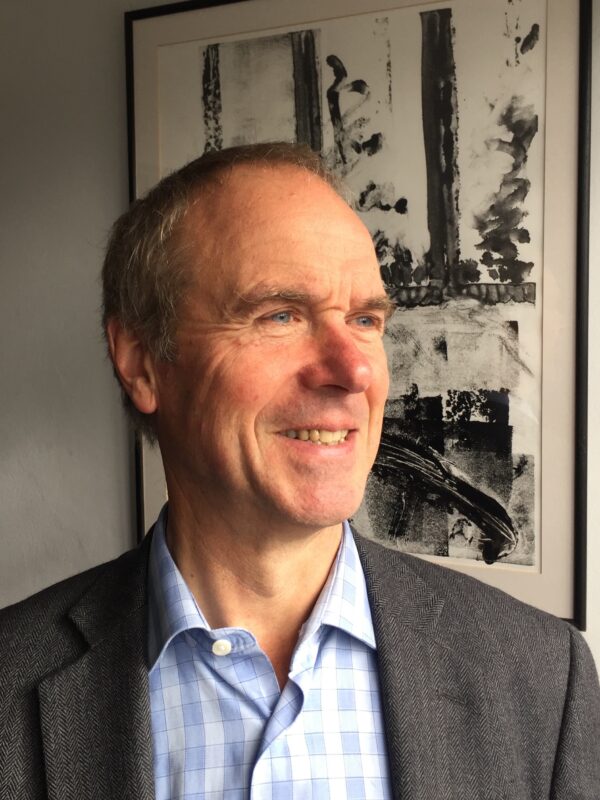
Dr. Christopher Knowles
Veranstaltungsort
Volkshochschule
Aegidiimarkt 70
48143 Münster
Es ist furchtbar aber es geht – as the comedians Jürgen Becker and Rüdiger Hoffmann said in the 1990s. Was the creation of NRW a Zwangsehe, as some politicians and historians have claimed, forced on two unwilling partners by the British? Or was it, as other, more recent historians have argued, the result of earlier discussions in Germany during the Weimar Republic? Were Germans, as the CDU historian Guido Hitze has argued, the ‘wichtige Inspiratoren’ of the ‘Alliierten Neugliederungsmaßnahmen’, but dependent on the Allies, and on the British in particular, to cut the Gordian knot and in his words: ‘eine Entscheidung zu treffen, die sie gar nicht treffen konnte’?
In his lecture, Christopher Knowles will present a British perspective on the issue. Why did the British create the new Land of North Rhine-Westphalia on 23rd August 1946, what other options were considered and rejected, and how much influence did German politicians such as Kurt Schumacher, Konrad Adenauer, Robert Lehr, Karl Zuhorn, Rudolf Amelunxen or Heinrich Drake in Lippe, really have on their decision?
Christopher Knowles studied history as an undergraduate at Gonville & Caius College, Cambridge from 1971-74. After a career in electronic publishing and computer software, he resumed his academic studies in October 2005 at the Centre for Contemporary British History at the University of London and subsequently at Kings College London. His PhD thesis on what British people aimed to achieve in occupied Germany from 1945-1948 was awarded the annual prize of the German Historical Institute, London, in 2014. He was Archives By-Fellow at Churchill College, Cambridge for the Easter term, 2018, before returning to Kings as a Visiting Research Fellow.
His research has focused on military occupation as a dynamic power relationship: A form of government and system of rule. His first book, Winning the Peace: The British in occupied Germany, 1945-1948, was published by Bloomsbury Academic in January 2017. His second book, Transforming Occupation in the Western Zones of Germany: Politics, Everyday Life and Social Interactions, 1945-1955, an edited collection with chapters by sixteen international scholars, was published in August 2018. In September 2021 he co-founded the Occupation Studies Research Network which acts as an on-line hub for a global community of over 200 scholars actively researching the phenomenon of military occupation. He was joint convenor of the Network and principal editor of the Network blog before retiring from academic work in April 2026.
10. September 2026 20:00
Dr. Christopher Knowles
Veranstaltungsort
Volkshochschule
Aegidiimarkt 70
48143 Münster
Es ist furchtbar aber es geht – as the comedians Jürgen Becker and Rüdiger Hoffmann said in the 1990s. Was the creation of NRW a Zwangsehe, as some politicians and historians have claimed, forced on two unwilling partners by the British? Or was it, as other, more recent historians have argued, the result of earlier discussions in Germany during the Weimar Republic? Were Germans, as the CDU historian Guido Hitze has argued, the ‘wichtige Inspiratoren’ of the ‘Alliierten Neugliederungsmaßnahmen’, but dependent on the Allies, and on the British in particular, to cut the Gordian knot and in his words: ‘eine Entscheidung zu treffen, die sie gar nicht treffen konnte’?
In his lecture, Christopher Knowles will present a British perspective on the issue. Why did the British create the new Land of North Rhine-Westphalia on 23rd August 1946, what other options were considered and rejected, and how much influence did German politicians such as Kurt Schumacher, Konrad Adenauer, Robert Lehr, Karl Zuhorn, Rudolf Amelunxen or Heinrich Drake in Lippe, really have on their decision?
Christopher Knowles studied history as an undergraduate at Gonville & Caius College, Cambridge from 1971-74. After a career in electronic publishing and computer software, he resumed his academic studies in October 2005 at the Centre for Contemporary British History at the University of London and subsequently at Kings College London. His PhD thesis on what British people aimed to achieve in occupied Germany from 1945-1948 was awarded the annual prize of the German Historical Institute, London, in 2014. He was Archives By-Fellow at Churchill College, Cambridge for the Easter term, 2018, before returning to Kings as a Visiting Research Fellow.
His research has focused on military occupation as a dynamic power relationship: A form of government and system of rule. His first book, Winning the Peace: The British in occupied Germany, 1945-1948, was published by Bloomsbury Academic in January 2017. His second book, Transforming Occupation in the Western Zones of Germany: Politics, Everyday Life and Social Interactions, 1945-1955, an edited collection with chapters by sixteen international scholars, was published in August 2018. In September 2021 he co-founded the Occupation Studies Research Network which acts as an on-line hub for a global community of over 200 scholars actively researching the phenomenon of military occupation. He was joint convenor of the Network and principal editor of the Network blog before retiring from academic work in April 2026.